
Modern U.S. pennies—especially post-1959 Lincoln Memorial and Lincoln Shield cents—appear far too common to become valuable. Billions are minted each year at high speed in Philadelphia, Denver, and San Francisco. Most circulate until worn out, land in jars, or vanish into bulk machines.
Yet some of these ordinary coins turn into genuine rarities worth hundreds or even thousands of dollars. The value of these rare pennies does not come from limited mintages. It comes from rare and unpredictable production anomalies that affect only a small number of coins before Mint technicians correct the issue.
This is the foundation of rarity in modern pennies: scarcity created by error, not intentional design. Understanding how these anomalies form helps collectors identify the few valuable survivors hidden among billions of common pieces.
Why Common Pennies Can Turn Into Valuable Collectibles
Rarity in modern cents emerges from specific mechanical, metallurgical, and design-related conditions inside the Mint. When these occur briefly, they leave behind only a small set of identifiable coins.
1. Mint Errors That Escape Detection
High-speed presses occasionally misstrike coins. Only a small batch slips through before the machine resets. These valuable error types include:
- Off-center strikes
- Broadstrikes
- Wrong planchet strikes
- Clipped planchets
- Misaligned dies
These create immediate visual differences that collectors can spot without special tools.
2. Die Varieties Created During the Hubbing Process
Die misalignment or hub doubling creates varieties that affect only a limited number of planchets:
- Doubled Die Obverse (DDO)
- Doubled Die Reverse (DDR)
- Misplaced mint elements
Once discovered, the die is replaced or corrected, leaving only a small surviving group.
3. Transitional Features and Design Changes
Some coins become rare because they appear during a changeover period:
- 1982 copper vs zinc compositions
- Close AM and Wide AM reverses
- Early or late die states
These traits occur in small windows and create scarcity even among high-volume years.
4. Survival in High Grade
Modern pennies tone, spot, and scratch easily. Only a fraction remain in bright red (RD) condition, and those survivors command major premiums.
Key Modern Penny Errors, Varieties, and Real Market Values
Modern U.S. pennies become rare when production flaws occur briefly and only a small number leave the Mint before correction. These anomalies transform ordinary cents into valuable collectibles that a coin identifier will mark as ‘worth saving’. Understanding the categories, diagnostics, and real-world prices helps collectors focus on the coins that matter.
1. Doubled Dies (The Most Sought-After Modern Variety)
Doubled dies occur when a working die receives misaligned impressions from the hub. This affects only a small batch of coins before the die is retired.
Important examples include:
- 1969-S Doubled Die Obverse — one of the most dramatic doubled dies of the modern era; up to $126,500 in MS64 RD.
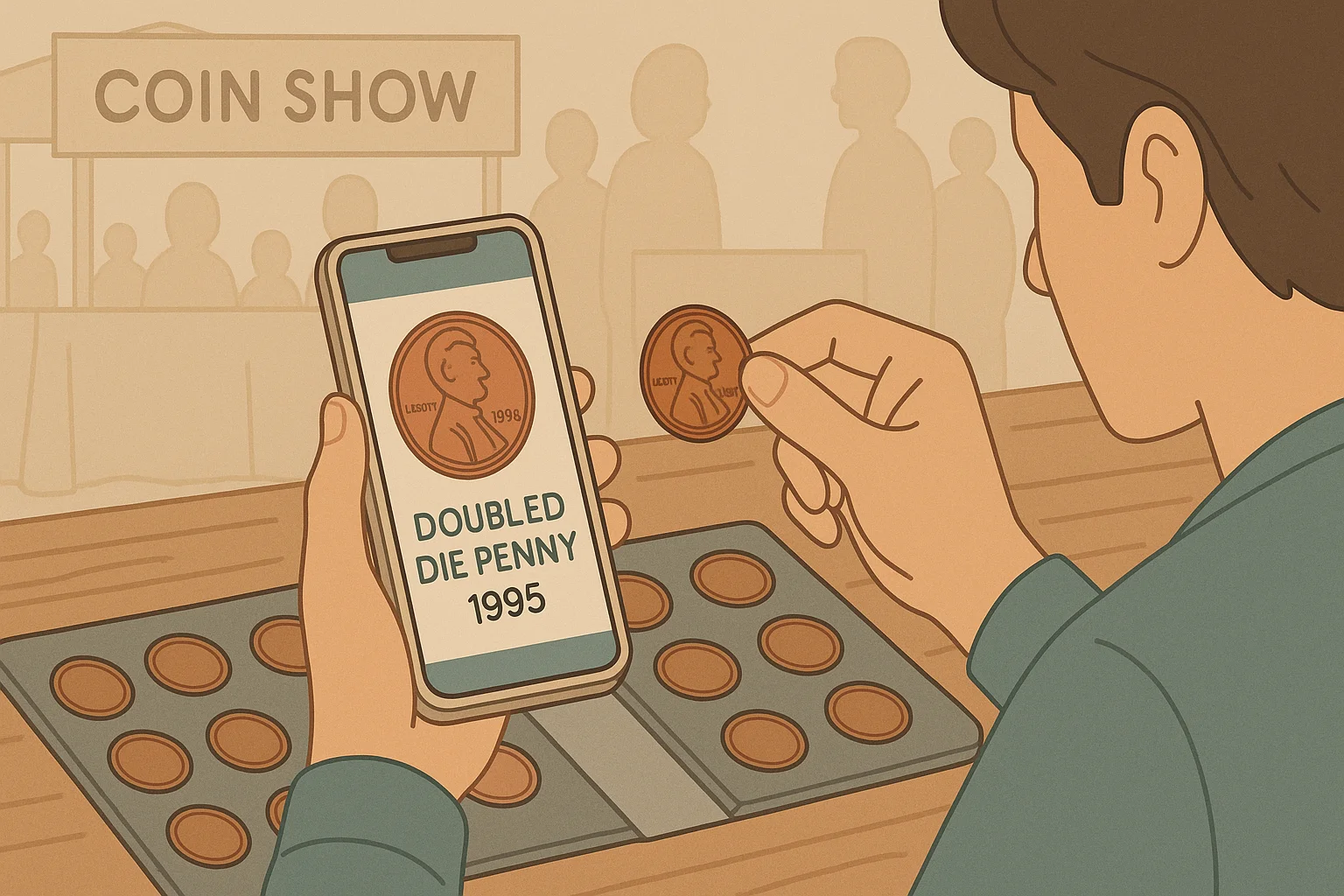
- 1995 DDO — noticeable doubling on LIBERTY and the date; high-grade pieces around $350+.
- 1971-S Proof DDO — subtle but rare; values around $500 in higher proof grades.
These errors stand out because their doubling is visible even with modest magnification, making them popular among both beginners and specialists.
2. Transitional and Design-Based Varieties
Some varieties emerge when the Mint changes metals or working hubs:
- 1982 Small Date Copper vs. Zinc — copper versions of certain dies command major premiums; high-grade examples can reach $15,000.
- Close AM / Wide AM reverses (1992, 1998, 1999, 2000) — caused by mismatched reverse hubs; a 1992-D Close AM regularly sells for over $1,000.
These varieties are prized for clear diagnostics and small survivor counts despite massive overall mintages.
3. Off-Center, Broadstrike, and Planchet Errors
These mechanical errors create instantly recognizable rarities:
- 1970-S large-date 60% off-center — about $20–$25.
- Clipped planchets — often $10–$50, depending on severity.
- Wrong planchet strikes — extremely rare and highly valuable.
Because these errors are visually dramatic, they attract strong interest on the open market.
Market Values at a Glance
| Error / Variety | Year | Key Feature | Typical Value (MS RD) |
| 1969-S DDO | 1969-S | Heavy obverse doubling | Up to $126,500 |
| 1992-D Close AM | 1992-D | Tight A-M spacing | $1,000+ |
| 1995 DDO | 1995 | Doubling on date | $350+ |
| 1982 Copper Small Date | 1982 | Transitional metal | $15,000+ |
| 1971-S Proof DDO | 1971-S | Doubled proof die | $500+ |
How to Identify Rare Pennies, Verify Errors, and Build a Smart Collecting Strategy
Finding valuable modern pennies requires careful inspection, reliable verification, and a clear plan. With billions of cents in circulation, the challenge isn’t quantity—it’s learning how to isolate the small number of coins that contain meaningful errors or varieties.
1. Use Proper Magnification
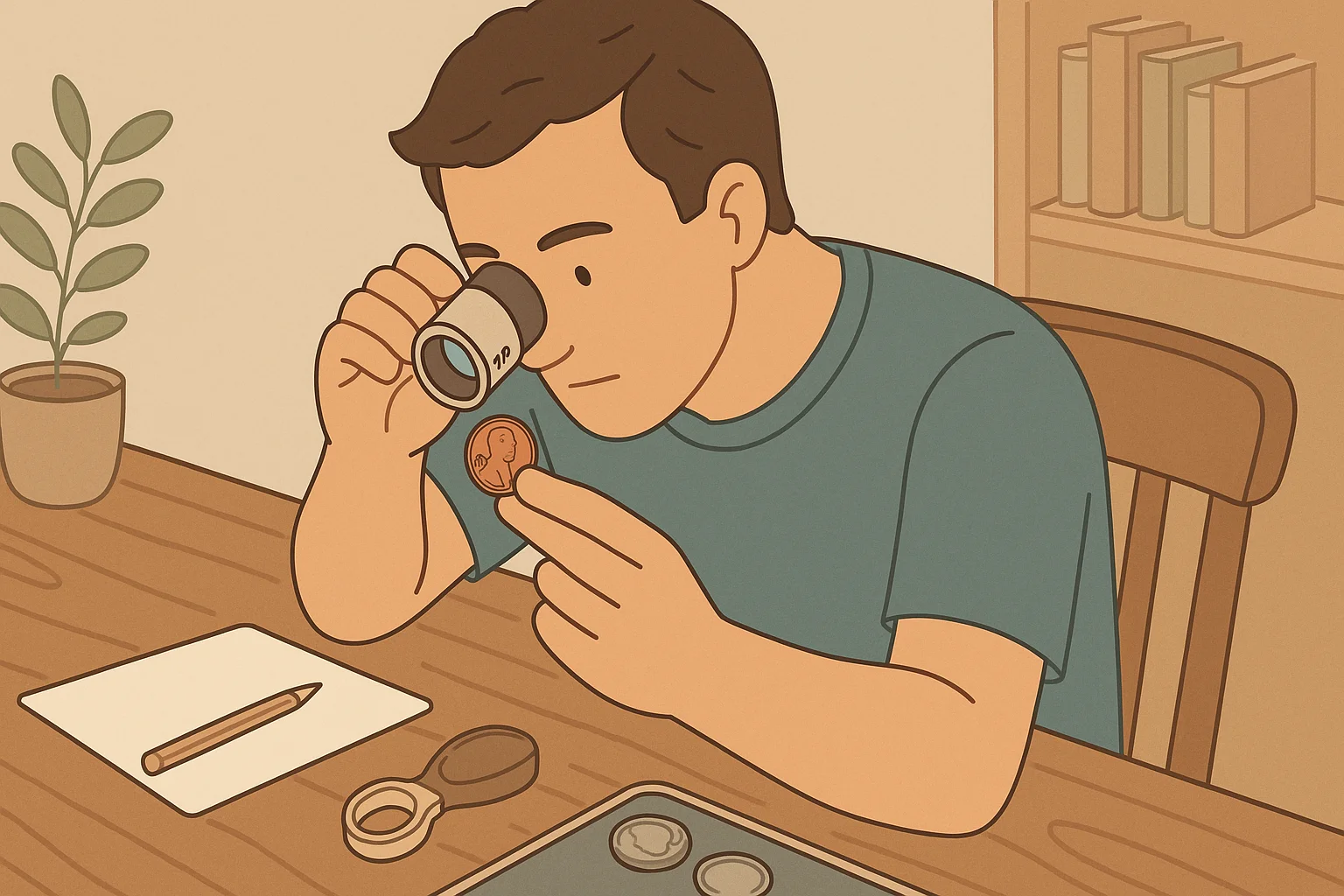
A 10x loupe or a simple USB microscope reveals key features such as:
- Split serifs (sign of a doubled die)
- Extra thickness in lettering
- Misaligned elements
- Clipped rims or incomplete strikes
Good lighting combined with a steady surface makes diagnostics easier.
2. Learn the Diagnostics for Major Varieties
Each major error type has distinct markers. For example:
- 1992-D Close AM: A and M nearly touching.
- 1995 DDO: LIBERTY and the date show visible doubling.
- 1982 Copper vs. Zinc: Weight separates compositions (3.11 g copper vs. 2.5 g zinc).
Knowing these markers prevents misidentifying worn coins as something special.
3. Compare to Verified Visual References
Use trusted sources such as:
- PCGS CoinFacts
- NGC VarietyPlus
- Cherrypickers’ Guide
These provide high-resolution photos and grading notes for the most valuable errors.
Digital Tools That Accelerate Identification
Mobile tools are now central to modern numismatics. The Coin ID Scanner app is a coin value checker that is especially useful for confirming features quickly.
How it helps collectors:
- Photo-based identification (camera or gallery upload)
- Detailed coin card with mint years, type, composition, edge, diameter, weight, and price
- Collection Management for tracking finds
- A database of 187,000+ global coins
- Smart filters (premium) for narrowing searches
- AI Coin Helper to compare visual traits with known varieties
These features simplify verification and reduce the risk of mistaking common coins for rare ones.
Practical Collecting Tips
To maximize your chances of finding valuable modern pennies:
- Search bank rolls for fresh sources of older dates.
- Check Coinstar reject trays for unnoticed oddities.
- Submit strong candidates to PCGS or ANACS for attribution.
- Compare prices using Heritage Auctions and GreatCollections before buying raw coins online.
- Prioritize coins with strong RD (red) color, as these command the highest premiums.
Modern U.S. pennies become rare through unexpected errors, transitional events, and limited die varieties—not through small mintages. By learning the diagnostics, using digital verification tools, and following smart collecting strategies, enthusiasts can confidently identify the few valuable outliers hidden among billions of ordinary cents.